
Digital Patients & Virtual Anatomy: How Technology Is Redefining Medical Learning

Digital Patients & Virtual Anatomy: How Technology Is Redefining Medical Learning
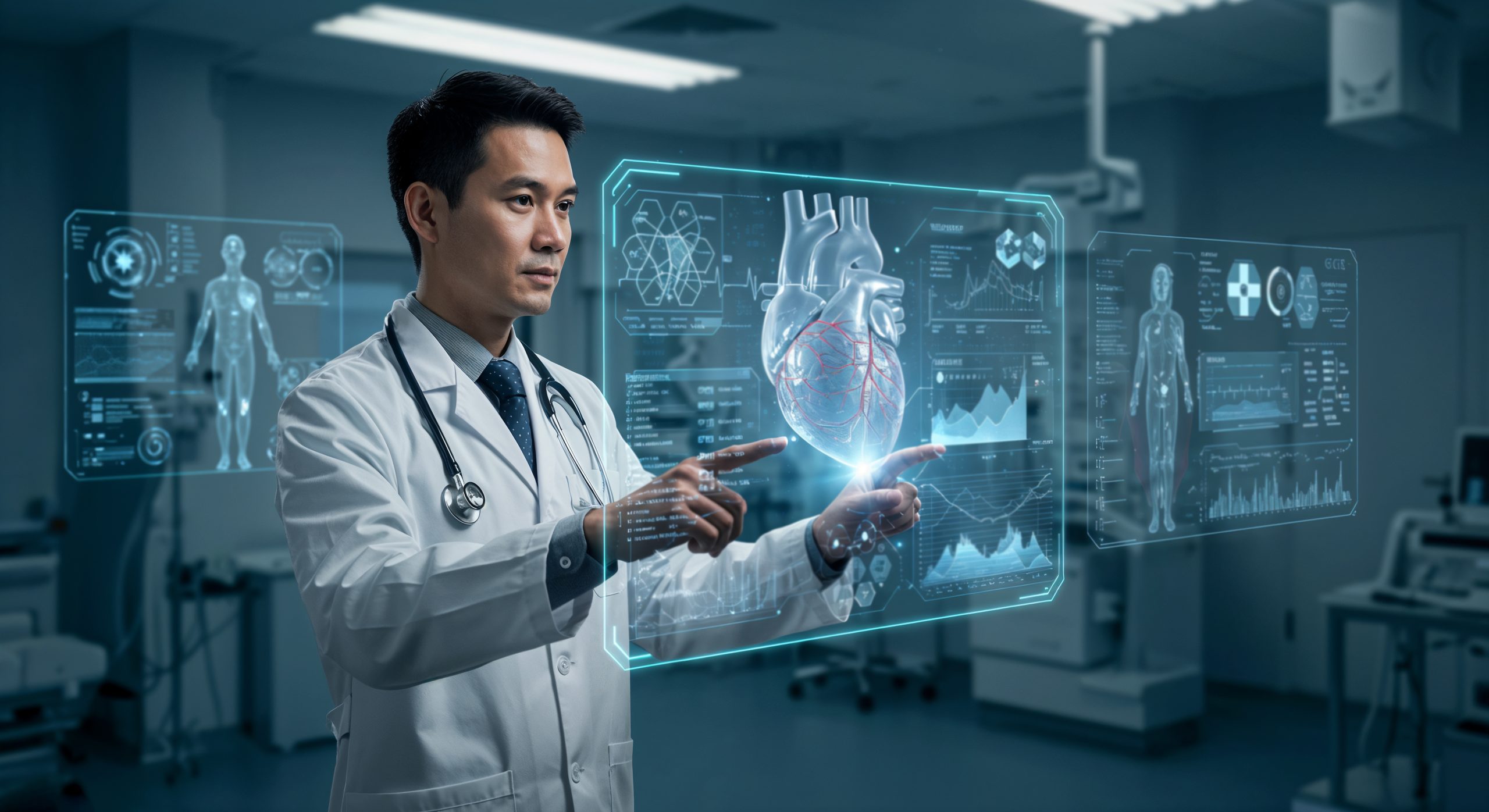
Medical education is undergoing a profound transformation. As healthcare systems become more complex and patient expectations evolve, traditional teaching models are being enhanced by immersive digital tools. Among the most impactful innovations are digital patients and virtual anatomy platforms, which are redefining how future doctors and healthcare professionals learn, practise, and prepare for real-world clinical care.
From Textbooks to Interactive Learning Environments
For decades, medical learning relied heavily on textbooks, cadaveric dissections, and observational clinical exposure. While foundational, these methods have limitations in scalability, accessibility, and repeatability. Digital learning environments now bridge these gaps by offering interactive, technology-driven experiences that allow students to visualise, simulate, and practise clinical scenarios without constraints of time or availability.
Virtual anatomy platforms enable learners to explore the human body layer by layer in three dimensions. Organs, systems, and structures can be isolated, rotated, and examined repeatedly, helping students grasp spatial relationships that are often difficult to visualise through static images alone. This approach enhances anatomical accuracy and reinforces long-term retention.
Digital Patients: Simulating Real Clinical Complexity
Digital patients go beyond anatomy. They replicate realistic clinical scenarios, presenting students with symptoms, medical histories, diagnostic results, and evolving conditions. Learners must apply clinical reasoning, make decisions, and observe the consequences of their actions in a risk-free environment.
These simulations expose students to a wide range of cases, from common presentations to rare conditions, that may not always be encountered during clinical postings. More importantly, digital patients train students to think holistically, integrating knowledge across disciplines such as pathology, pharmacology, physiology, and ethics.
Enhancing Clinical Confidence and Decision-Making
One of the greatest advantages of virtual learning tools is the ability to learn through repetition without patient risk. Students can practise clinical examinations, diagnostic reasoning, and treatment planning multiple times, receiving structured feedback at each step. This builds confidence before entering real clinical settings and reduces anxiety when transitioning from classroom learning to patient care.
Virtual environments also encourage active participation rather than passive observation. By placing students at the centre of decision-making, technology-driven learning fosters critical thinking, accountability, and professional judgement, skills that are essential for modern healthcare practice.
Preparing for a Technology-Driven Healthcare System
Healthcare itself is becoming increasingly digital, with electronic health records, telemedicine, AI-assisted diagnostics, and remote monitoring now integral to patient care. Early exposure to digital tools during medical training ensures students are digitally fluent, adaptable, and prepared to work within advanced healthcare systems worldwide.
Virtual anatomy and digital patient platforms also support interdisciplinary learning, allowing medical and allied health sciences students to collaborate within shared simulations. This mirrors real clinical environments where teamwork and communication are vital for patient safety and outcomes.
A Future-Focused Approach to Medical Education
At Manipal University College Malaysia, the integration of advanced educational technologies reflects a commitment to global standards in healthcare education. By combining strong academic foundations with immersive digital learning, students gain not only theoretical knowledge but also the practical competence required in diverse clinical environments.
As medical education continues to evolve, digital patients and virtual anatomy will no longer be optional enhancements, they will be essential pillars of training. These tools empower students to learn smarter, practise safer, and graduate better prepared to meet the demands of modern medicine.
The future of healthcare begins in the classroom, and increasingly, that classroom is digital.